
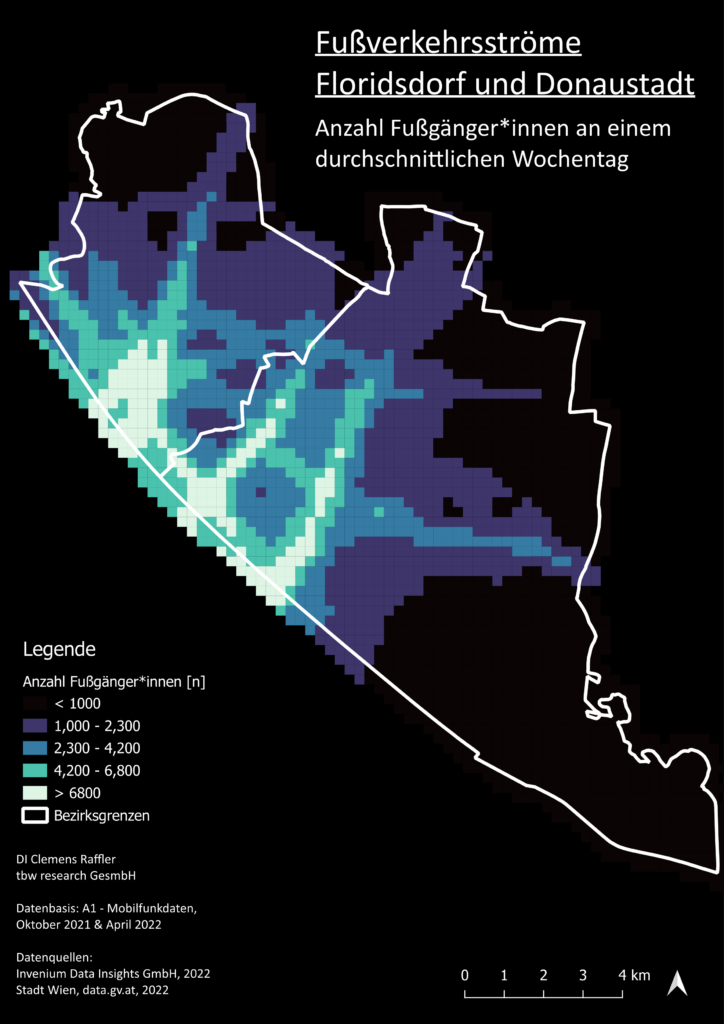
Walking Data – Success Metrics and Systems Impact
“When we invest in walking, we invest in everyone.”
Petra Jens, Walking Officer for Vienna
An applied innovation project in collaboration with the Highland Council and funded by the Scottish Roads Research Board. All modes traffic modelling by Arup.
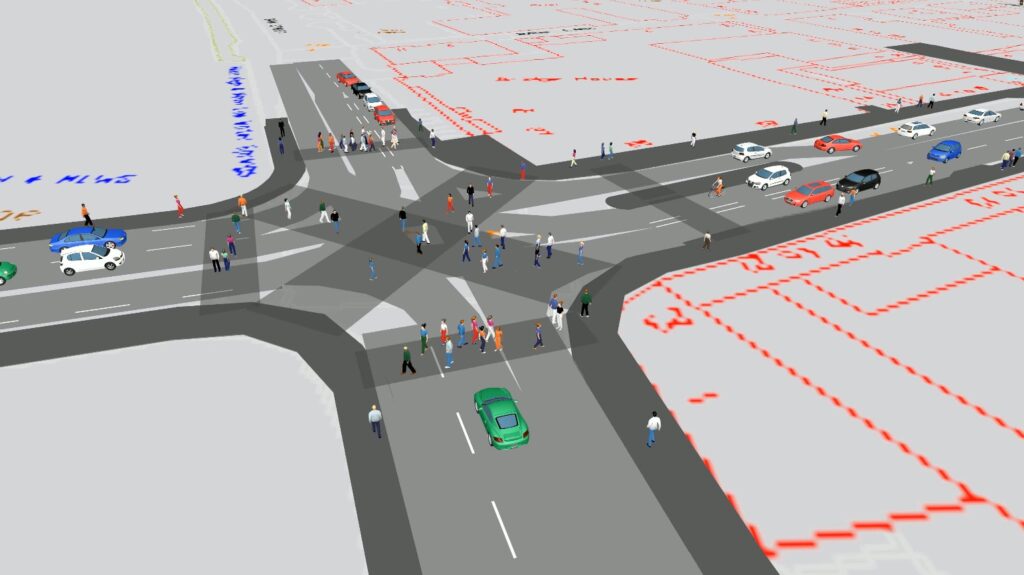
The Walking Data project explores existing approaches to collecting and using walking data, including areas of recent innovation. The project includes a case study of an all-modes traffic model of a junction to explore the value of including walking in traffic models.
Download the final report HERE
Download the ppt HERE
Findings in a Nutshell
Collecting walking data is a relevant and important success metric on route to delivering and monitoring increases in walking and a reduction in car kilometres in Scotland.
Walking data can be used to understand when and where walking is happening, to inform design and maintenance, to optimise junctions and crossings, and to track post-intervention increases (or decreases).
There are a range of available walking data counters and reporting services. Emerging innovation approaches using mobile phone/app mixed data have potential to provide wide network coverage including across rural areas.
International data shows that higher levels of walking has a strong association with a reduction in car modal share. As such, increasing walking is key to decarbonising transport.
Walking is the second largest mode of transport in Scotland at 25% modal share and is already a significant mode of transport. As improving road safety for pedestrians is a serious priority, better walking data would be relevant to shape and focus efforts to improve this.
Without walking data, we risk making important design and investment decisions about on incomplete information.
Download the final report HERE
Dowload the ppt HERE